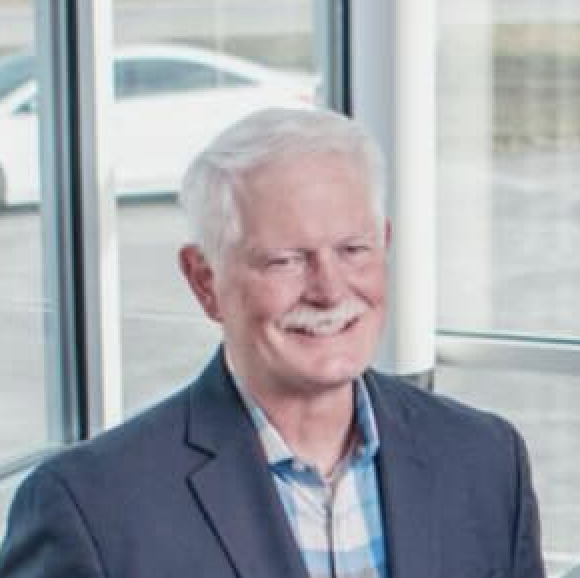
Caring for Kids Is Caring for the City
A Conversation with Porsche Seals
Courageous Conversations Study Guide
Episode Overview
This episode explores the vital intersection of advocacy, education, and community involvement through the lens of Porsche Seals, who went from stay-at-home mom to city-wide advocate for children and families. Porsche shares her unexpected journey from PTA president to Executive Director of Caring for Kids, challenging the "cookie-cutter" approach to volunteerism and revealing how systemic inequities continue to impact education in Kansas City. The conversation dives deep into the realities of educational disparities—using the powerful "Monopoly board" analogy—and highlights the urgent need for literacy and mentoring to break the school-to-prison pipeline. Porsche's message is clear: you don't need to start something new; you just need to show up.
Key Themes
1. Advocacy as "Showing Up"
Advocacy isn't a title or a degree—it's the willingness to speak up when people aren't being treated fairly. Porsche discovered her calling by simply asking: "Why wouldn't we want to figure out how to make sure everybody can be involved regardless of their situation?"
2. The Monopoly Board of Inequity
Understanding history matters. When one group gets "400 times around the Monopoly board" before another group is invited to play, we can't pretend everyone has an equal chance at success. We are only four generations removed from slavery and sharecropping—the people who held signs to keep schools segregated may still be alive today.
3. The Literacy Lifeline
Students who are not reading on grade level by third grade face a "school-to-prison pipeline." Conversely, third-grade literacy is a key indicator of graduation. Mentoring and reading with a child for one hour a week can literally change the trajectory of their life.
4. Mobilization Over Innovation
Kansas City has thousands of nonprofits—we don't need more organizations; we need more people in them. The solution isn't starting something new; it's joining what already exists and bringing your unique passion to the table.
5. Empowerment Through Inclusion
By shifting PTA meetings from 9:00 AM to 6:00 PM, providing childcare, and creating alternative ways for dads with records to serve (landscaping, high-fiving kids), Porsche demonstrated that barriers to involvement are often structural, not motivational.
6. The Complexity of "Failed Experiments"
The Kansas City, Missouri School District received more funding than any other district in America to attract white families back to the city through magnet schools. While some students (like Porsche) benefited, the experiment ultimately failed. Understanding this history helps us see why current educational disparities exist.
7. "Get Off Your Blessed Assurance"
Frustration without action is useless. The way to change the narrative is to stop griping and complaining and instead mentor, volunteer, advocate, and invest in the future of Kansas City's children—one relationship at a time.
Discussion Questions
Opening Questions
1. Porsche mentions that she was a stay-at-home mom who "wasn't looking for" a career in advocacy. Have you ever felt God calling you to something you didn't plan or prepare for? How did you respond?
2. Have you ever been involved in your local school's PTA, volunteer programs, or community partnerships? If not, what has kept you from getting involved?
Exploring the Themes
On Advocacy and Inclusion:
3. Porsche discovered that only five people were making decisions for an entire school. Where in your community do you see "closed-door" decision-making that excludes certain voices?
4. She noticed that PTA meetings at 9:00 AM excluded working parents, and that black and brown parents were painted with a "broad stroke" as being uninterested. How do misconceptions and structural barriers prevent genuine partnership?
5. Porsche created alternative ways for "Watchdog" dads with criminal records to serve (landscaping, high-fiving kids at arrival/dismissal). How can we create "on-ramps" for people who feel their past disqualifies them from serving?
On History and Inequity:
6. The "Monopoly board" analogy illustrates how one group gets 400 times around the board before another is invited to play. How does this change your perspective on the "equal chance at success" narrative?
7. Porsche notes that we are only four generations removed from slavery and sharecropping, and that the people who held signs to keep schools segregated may still be alive. Why is it important to acknowledge this proximity to history?
8. Gary admits that ignorance often leads to acting like the problem doesn't exist because "I don't know what to do with this big mess of tangled thread." How does acknowledging our ignorance become the first step toward learning and action?
On Education and Literacy:
9. Porsche discusses the "school-to-prison pipeline"—students who don't read on grade level by third grade face a formula that predicts violence, incarceration, or death. How does the simple act of reading with a child for one hour a week combat this systemic issue?
10. She mentions that some parents "didn't really learn how to read or maybe they just got enough for them." How does illiteracy create a generational cycle that requires outside intervention to break?
11. Porsche says, "They cannot get a livable wage without knowing how to read." Why is third-grade literacy not just an academic issue but an economic justice issue?
On Moving Forward:
12. Porsche challenges listeners: "Don't start a new nonprofit. Just go join one." Why are we often tempted to start something new rather than join something existing?
13. She says, "The way you change the narrative is to be a part of change... to get off of your blessed assurance and to do something besides gripe and complain." What is one area where you've been "griping" without taking action?
14. Porsche told her interviewers, "The things I don't know, I can learn, but what I have in my heart, you cannot replicate." What is the "unreplicable" passion in your heart that God might be calling you to steward?
Practical Applications
This Week:
Take the "Dividing Lines" Tour: Download the app and drive through Kansas City to see the "deeply rooted planned divisiveness" of the city. Reflect on how historical decisions continue to impact neighborhoods today.
Contact Your Local School: Visit your school district's website, search for "volunteer," and sign up for training. Even if you don't have kids in the school, you can still serve.
Examine Your Barriers: Reflect on what has kept you from getting involved in your local school or community. Is it time? Lack of knowledge? Fear? Write down one practical step you can take to overcome that barrier.
This Month:
Become a Mentor: Contact Caring for Kids, Lead to Read, or your local elementary school to sign up as a literacy mentor. Commit to one hour per week with one student.
Support Holistic Efforts: Identify a local organization (like Caring for Kids, The Hope Center, or Unite KC) that focuses on comprehensive development. Find a way to contribute your time, talent, or treasure.
Build Cross-Cultural Relationships: Porsche's work bridges black, brown, and white communities. Identify one person from a different racial or cultural background and intentionally invest in that friendship—not as a project, but as genuine relationship.
This Year:
Advocate in Your Lane: Porsche says, "Whatever space you really care about, you have an opportunity to say, 'How can I be useful in that area?'" Identify your lane (education, medicine, housing, banking, sports, arts) and research one systemic inequity in that field. What is one way you can advocate for change?
Study the History: Research the Kansas City, Missouri School District's magnet school experiment and the impact of desegregation efforts. Learn about redlining, the Troost Avenue divide, and how these historical decisions continue to shape the city today.
Invest Eternally: Porsche challenges listeners to "save some Chipotle money" and invest in kids. Evaluate your budget. How much are you spending on conveniences versus investing in the future of a child?
Join the Unchained Initiative: In 2026, Unite KC and Caring for Kids are partnering to mobilize churches and community partners to fight illiteracy. Get involved by contacting unitekc.org.
Biblical Foundations
Proverbs 31:8-9 - "Speak up for those who cannot speak for themselves, for the rights of all who are destitute. Speak up and judge fairly; defend the rights of the poor and needy." Application: Advocacy is a biblical mandate. Porsche's work of "speaking up" for children and families who are excluded from decision-making tables is a direct expression of this command. When five people make decisions for an entire school, someone must speak for those who have no voice.
Matthew 18:5 - "And whoever welcomes one such child in my name welcomes me." Application: Mentoring a child, reading with a student, or high-fiving a kid before school isn't just community service—it's an act of worship. When we welcome and invest in children, we are welcoming Christ himself.
Isaiah 58:6-7 - "Is not this the kind of fasting I have chosen: to loose the chains of injustice and untie the cords of the yoke, to set the oppressed free and break every yoke? Is it not to share your food with the hungry and to provide the poor wanderer with shelter—when you see the naked, to clothe them, and not to turn away from your own flesh and blood?" Application: The "school-to-prison pipeline" is a modern yoke that must be broken. Literacy mentoring, advocacy for equitable school funding, and creating pathways for parents with records to serve are all ways we "loose the chains of injustice."
Galatians 6:9 - "Let us not become weary in doing good, for at the proper time we will reap a harvest if we do not give up." Application: Porsche's journey from PTA president to Executive Director of Caring for Kids (now serving 114 schools and 450+ community partners) demonstrates that faithfulness over time produces a harvest. Even when COVID caused massive regression, God sustained the work.
Philippians 2:4 - "Let each of you look not only to his own interests, but also to the interests of others." Application: Porsche shifted from being a stay-at-home mom focused on her own children to becoming a city-wide advocate for all children. This is the heart of Philippians 2—looking beyond our own families to the flourishing of our neighbors' children.
James 2:15-17 - "Suppose a brother or a sister is without clothes and daily food. If one of you says to them, 'Go in peace; keep warm and well fed,' but does nothing about their physical needs, what good is it? In the same way, faith by itself, if it is not accompanied by action, is dead." Application: Porsche's challenge to "get off your blessed assurance and do something besides gripe and complain" echoes James' call to action. Faith without works—mentoring, volunteering, advocating—is dead.
Jeremiah 29:7 - "Also, seek the peace and prosperity of the city to which I have carried you into exile. Pray to the Lord for it, because if it prospers, you too will prosper." Application: Caring for kids is caring for the city. When children flourish, the entire city prospers. Porsche's work demonstrates that seeking the shalom of Kansas City means investing in the education, safety, and future of its most vulnerable residents.
Reflection & Action Steps
Personal Reflection:
Porsche says, "I'm not going to let anybody speak on my behalf. I'm not going to let anybody make those decisions without me." Where in your life have you been passive, allowing others to make decisions that affect you or your community?
She describes being "settled in being unsettled" when God called her to advocacy. What "unsettled" calling might God be inviting you into right now?
Porsche mentions that her husband's grandmother was run out of Raytown by the KKK. How does hearing "real-life" stories of local history change your view of the neighborhoods you drive through every day?
When you think about the "Monopoly board" analogy, how does it challenge your assumptions about equal opportunity in education, housing, or employment?
Porsche says, "The things I don't know, I can learn, but what I have in my heart, you cannot replicate." What is the unreplicable passion in your heart that God might be calling you to steward?
Conversation Starters:
"I recently learned about the 'Monopoly board' analogy for understanding systemic inequity. It really changed how I think about equal opportunity. What do you think about it?"
"I've been thinking about the difference between enabling and empowering. How can we help our neighbors in a way that respects their dignity and responsibility?"
"Did you know that students who don't read on grade level by third grade face a 'school-to-prison pipeline'? What do you think we can do about that?"
"I heard someone say, 'Caring for kids is caring for the city.' How do you think investing in children impacts the future of our entire community?"
Group Activity:
The Dividing Lines Tour: As a group, download the "Dividing Lines" app and take the tour together in one vehicle. Drive through Kansas City and listen to the stories of "planned divisiveness"—redlining, the Troost Avenue divide, and the magnet school experiment. Afterward, discuss:
What surprised you?
What made you uncomfortable? Why?
What did you learn that you didn't know before?
What is one thing you can do differently as a result?
Going Deeper
Recommended Resources:
Caring for Kids - Mobilizing schools, churches, and community partners to serve Kansas City's children (caringforkidskc.org)
Lead to Read - Literacy mentoring program with established pathways into Kansas City schools
The Dividing Lines Tour - An app-based driving tour that reveals the historical roots of Kansas City's racial and economic divisions
Search Institute's 40 Developmental Assets - A framework for youth development focusing on strengths rather than deficits (also used by The Hope Center)
Unite KC's Unchained Initiative (2026) - Partnership between Unite KC and Caring for Kids to mobilize churches to fight illiteracy
For Further Study:
Research the history of the Kansas City, Missouri School District's magnet school experiment and desegregation efforts
Study the impact of redlining and restrictive covenants on Kansas City neighborhoods
Learn about the "school-to-prison pipeline" and how third-grade literacy is a key indicator of graduation
Explore the Troost Avenue divide and how it continues to shape economic and educational disparities
Read about the role of churches in education advocacy and school partnerships
Closing Prayer
Lord, thank you for advocates like Porsche who refuse to let others make decisions without the voices of those most affected. Thank you for her willingness to be "settled in being unsettled" and to follow Your call even when it didn't match her plans.
Help us to see the children in our city—not just our own children, but all children—as precious and worthy of our time, resources, and advocacy. Break our hearts for the "failed experiments" that left violins stacked in closets and students without the tools they need to succeed.
Give us the courage to acknowledge the proximity of our painful history—that we are only four generations removed from slavery, that the people who held signs to keep schools segregated may still be alive. Help us to stop smoothing over the truth and instead face it with humility and a commitment to repair.
Convict us when we are "griping and complaining" without taking action. Help us to "get off our blessed assurance" and do something—mentor a child, volunteer at a school, advocate for equitable funding, or simply show up as a caring adult.
Raise up a generation of children who can read, who feel loved, and who know that their community believes in them. May Your church lead the way in demonstrating that caring for kids is caring for the city. Use us as agents of hope and change. In Jesus' name, Amen.
Remember: Real change happens when we stop waiting for someone else to fix the problem and start showing up—one child, one hour, one relationship at a time. You don't have to be a "maven of education" to make a difference; you just have to be a caring adult.