Black History: John Perkins — A Long Obedience in the Same Direction
Learning from Faith, Courage, and Community Builders
Every February, we reflect on the lives of Black leaders whose faith, perseverance, and love for their communities continue to shape our city today. Their stories remind us that faith and action go hand in hand—and that lasting change happens through prayer, service, and faithful presence.
Each week, we’ll add a new reflection as part of our Black History Month series.
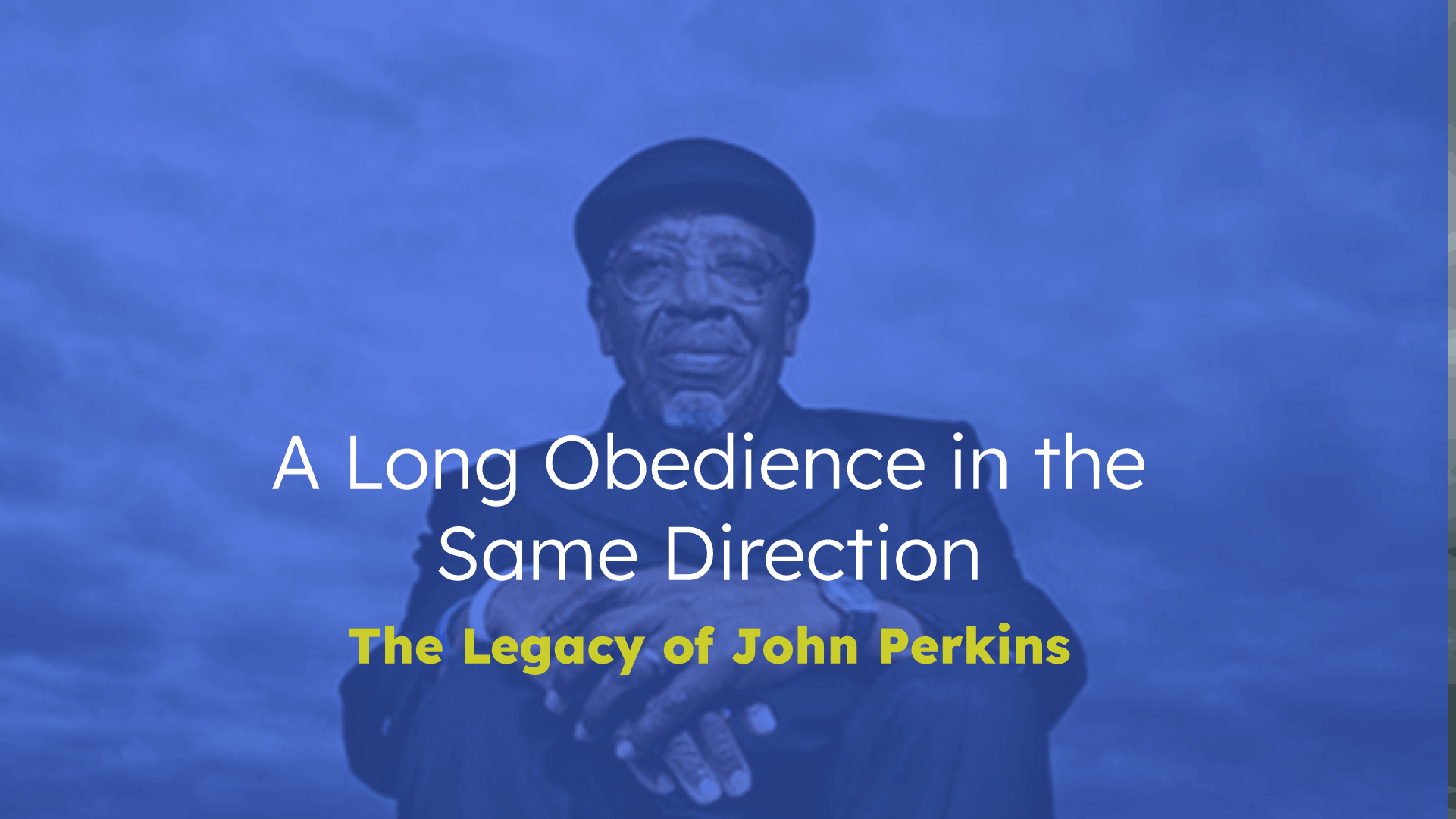
As we conclude our Black History Month series, we move from the educational front lines of Mary McLeod Bethune to the enduring, grassroots wisdom of a man who has spent over seven decades showing us what it looks like to love a neighborhood to life. If Seymour gave us a foundation of prayer, Carver a heart for stewardship, and Bethune a passion for justice, John Perkins gives us the blueprint for a lasting legacy.
Born into dire poverty in Mississippi and forced to flee to California after his brother was murdered by a police officer, Perkins eventually encountered the radical love of Jesus. That encounter didn't just save his soul; it sent him back to the very places he had fled, convinced that the Gospel had the power to transform both individuals and entire communities.
The "3 Rs" of Community Transformation
Perkins is best known for founding the Christian Community Development Association (CCDA) add link and developing a biblical framework for city flourishing known as the "3 Rs":
Relocation: Living among the people you serve. Perkins believes that the best way to understand a community's needs is to share its life.
Reconciliation: Bringing people together across racial, class, and denominational lines. He famously says, "Love is the final fight."
Redistribution: Not just of money, but of skills, education, and opportunities. It's about the "Big C Church" bringing its best resources to the places that need them most.
Discipleship as Neighborhood Investment
For John Perkins, discipleship isn't just a Bible study; it's a "long obedience in the same direction." It's about staying in one place long enough to see children grow up, businesses thrive, and broken systems begin to heal. At 94 years old, his life is a testament to the fact that true change doesn't happen overnight—it happens through faithful, multi-generational presence.
This is the heart of discipleship: passing the baton of faith and service to the next generation so that the work of reconciliation doesn't stop when we do.
Why John Perkins Matters for Kansas City Today
At Unite KC, we often talk about our "Pastor Partners" and our vision for citywide flourishing. John Perkins' model is the practical application of that vision. As we look toward the future of our city—including major events like the 2026 World Cup—we must ask ourselves if we are building temporary programs or lasting legacies.
Perkins challenges us to move beyond "transactional" ministry and into "transformational" relationships. Whether we are serving in our "lanes" of prayer, evangelism, literacy, or combating sex trafficking, we are called to do so with the kind of deep-rooted commitment that Perkins has modeled for nearly a century.
Our Final Call to Action:
To honor the legacy of John Perkins and all the heroes we've studied this month, let's commit to the "long obedience":
Commit to Proximity: How can you move closer to the needs of your specific neighborhood this year?
Invest in the Next Generation: Identify one young leader in your sphere and intentionally begin to mentor and disciple them in the work of reconciliation.
Practice the 3 Rs: Which of the "3 Rs" (Relocation, Reconciliation, Redistribution) is God calling you or your church to lean into more deeply?
As we close this series, let's remember that Black history is not just a month to be observed, but a legacy to be lived. May we be a people who pray like Seymour, serve like Carver, advocate like Bethune, and stay the course like Perkins.