Black History: William J. Seymour
Learning from Faith, Courage, and Community Builders
Every February, we reflect on the lives of Black leaders whose faith, perseverance, and love for their communities continue to shape our city today. Their stories remind us that faith and action go hand in hand—and that lasting change happens through prayer, service, and faithful presence.
Each week, we’ll add a new reflection as part of our Black History Month series.
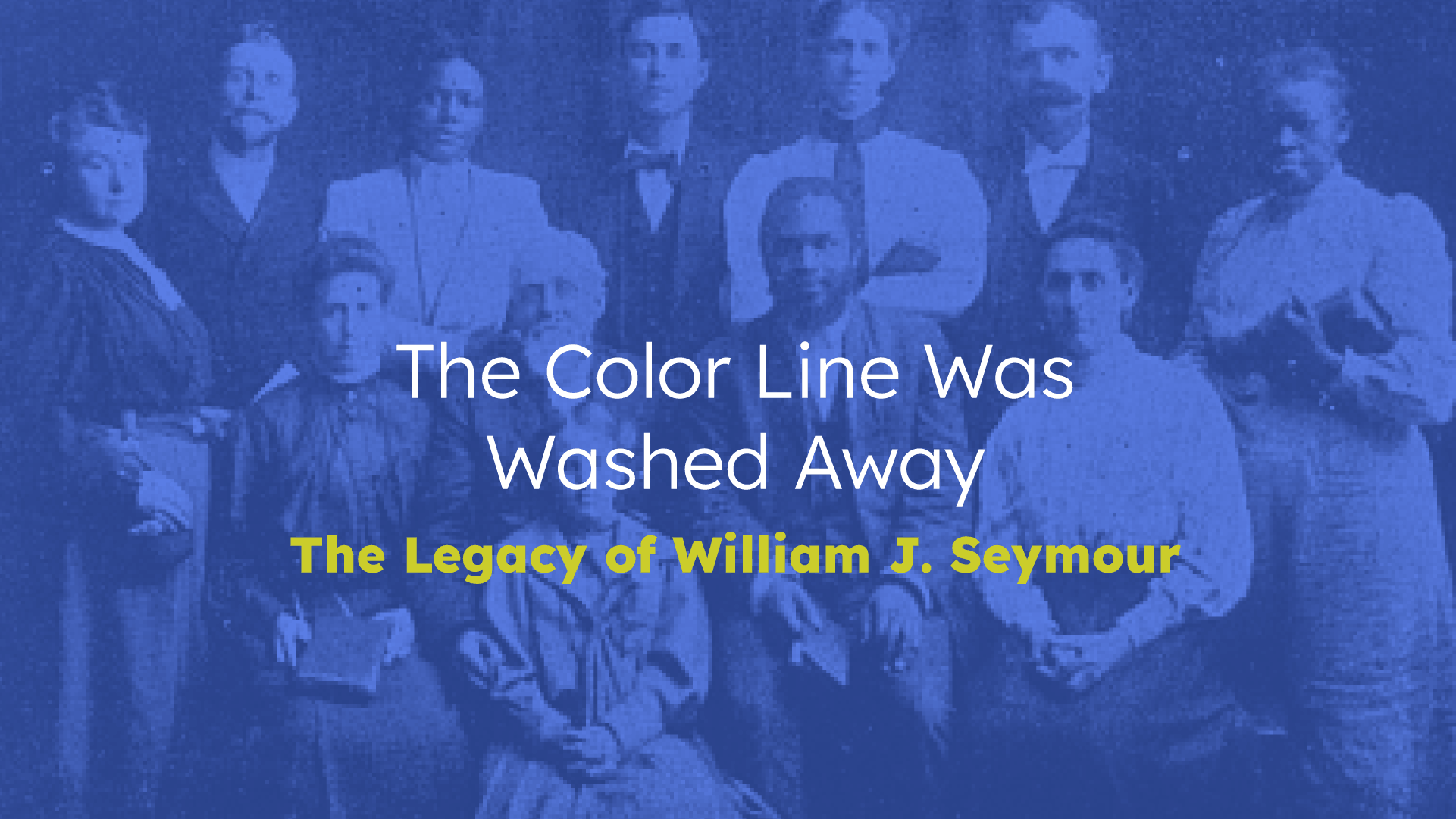
As we kick off Black History Month, we are reminded that the "Spiritual Roots" of our faith are often found in the most humble places. Long before we gathered for citywide prayer in Kansas City, a move of God began in 1906 that would change the world—led by a man who understood that true unity only comes through the presence of the Holy Spirit.
William J. Seymour, the son of formerly enslaved parents, arrived in Los Angeles with a singular focus: to see God move. Despite being blind in one eye (from smallpox) and facing the harsh realities of Jim Crow-era segregation, Seymour became the catalyst for the Azusa Street Revival—a movement that would birth modern Pentecostalism and touch millions worldwide.
He was known, above all else, as a "pray-er." Witnesses often described him sitting behind a makeshift pulpit—two empty wooden milk crates—with his head tucked inside the top one, lost in hours of prayer. He didn't seek the spotlight; he sought the Face of God. When he did speak, it was often simply to shout, "Repent!
The result was a miracle of reconciliation. At a time when the world was deeply divided by race, the Azusa Street mission became a place where, as eyewitness Frank Bartleman famously said, "The color line was washed away in the blood." Black, White, Hispanic, and Asian believers knelt together, prayed for one another, and were sent out to change the world. This was revolutionary in 1906 America.
Why this matters for us today:
As we work through Unite KC to foster "Courageous Conversations" (link to the podcast here) and build "Pastor Partnerships across racial lines, we are standing on the shoulders of William Seymour. He showed us that:
Prayer is the foundation: Our city flourishes when we move from our own strength to our knees.
Humility is the key: Seymour's lack of ego allowed the Holy Spirit to be the leader of the room. He modeled genuine humility that allowed others to shine.
Unity is the goal: The "big-C Church" is at its best when our common devotion to Jesus outweighs our cultural divisions.