Black History: George Washington Carver — Faith-Fueled Innovation
Learning from Faith, Courage, and Community Builders
Every February, we reflect on the lives of Black leaders whose faith, perseverance, and love for their communities continue to shape our city today. Their stories remind us that faith and action go hand in hand—and that lasting change happens through prayer, service, and faithful presence.
Each week, we’ll add a new reflection as part of our Black History Month series.
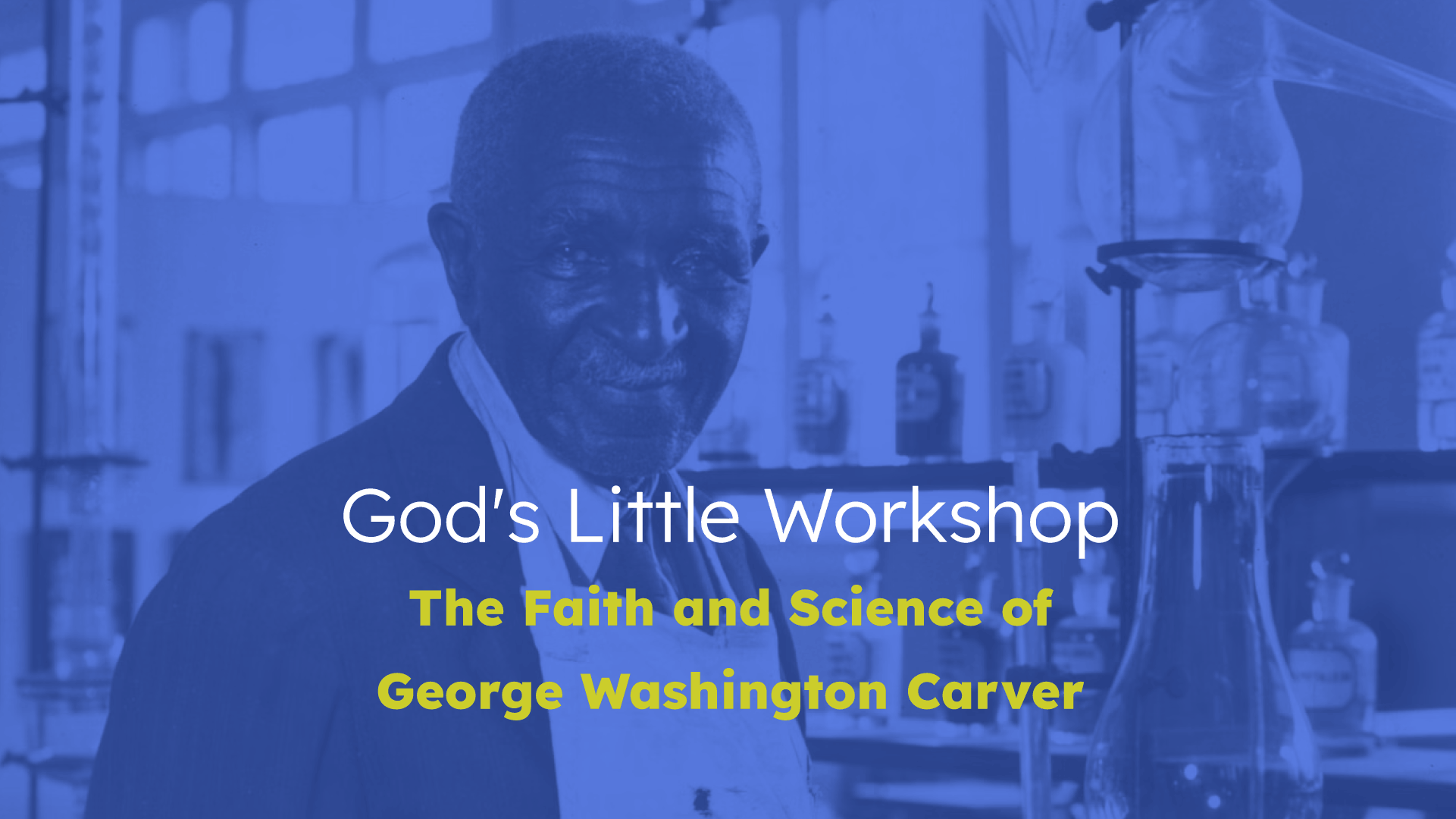
As we continue our Black History Month series, we turn from the prayer-soaked floors of Azusa Street to the quiet laboratory at Tuskegee Institute, where another man of deep faith was changing the world—one peanut at a time.
George Washington Carver (c.1864-1943) didn't see a contradiction between science and faith. For him, they were inseparable. Born into slavery and orphaned as an infant, Carver rose to become one of the most influential agricultural scientists of the twentieth century. But he would tell you his discoveries came not from his own brilliance, but from listening to the Creator.
A Laboratory Built on Prayer
Carver famously rose every morning at 4:00 AM to walk through the woods near Tuskegee, saying, "Nature is God's broadcast station. He's whispering to us every hour, if we will only tune in." 2 He called his laboratory "God's Little Workshop" and approached his research as an act of worship.
In one of his letters, Carver shared that he once asked God to reveal the secrets of the universe. God told him the universe was too big for him to understand. So Carver asked about man—still too big. Then he asked about plants—still too complex. Finally, God gave him the peanut, something small and humble, to study. Through that simple gift, Carver developed over 300 products and revolutionized Southern agriculture.
Faith That Broke Barriers
Carver's faith in Jesus wasn't just personal—it was transformative. He believed that faith could destroy "both barriers of racial disharmony and social stratification" [6]. As a Black man in the Jim Crow South, he was sought out by presidents, industrialists like Henry Ford and Thomas Edison, and farmers of all races because he carried a wisdom that transcended human understanding.
Despite his fame, Carver never patented his discoveries. He believed God gave them to him freely to help "the furthest man down" 2. He gave free advice to farmers, published 44 bulletins to help them succeed, and donated his life savings to establish a foundation for continued agricultural research.
Carver was as concerned with his students' character as their intellect. He compiled a list of "eight cardinal virtues"—including generosity, honesty, and humility—that he believed defined true greatness. For over 30 years, he taught a Bible class at Tuskegee, discipling the next generation in both faith and science.
Why Carver Matters for Kansas City Today
At Unite KC, we talk about City Flourishing and bringing Shalom to our neighbors. Carver's life gives us a beautiful model:
Stewardship of Creation: Carver believed "nothing should be wasted" 2. He saw God's hand in the lowliest plant, teaching us to look for potential and dignity in every corner of our city.
Service Over Self: Despite offers of fortune and fame, Carver stayed at Tuskegee, focused on lifting poor farmers out of poverty. His gravestone reads: "He could have added fortune to fame, but caring for neither, he found happiness and honor in being helpful to the world."
Faith-Fueled Innovation: Carver integrated his faith into everything he did, testifying that "his faith in Jesus was the only mechanism by which he could effectively pursue and perform the art of science."
As we work to adopt our neighborhoods and pray for Kansas City, let's follow Carver's example. Let's be a people who "tune in" to God's broadcast each morning, asking Him to show us how to bring flourishing to our city—one small, faithful act at a time.